
Blue Sky Thinking: Emma Enterprise in 2025-26
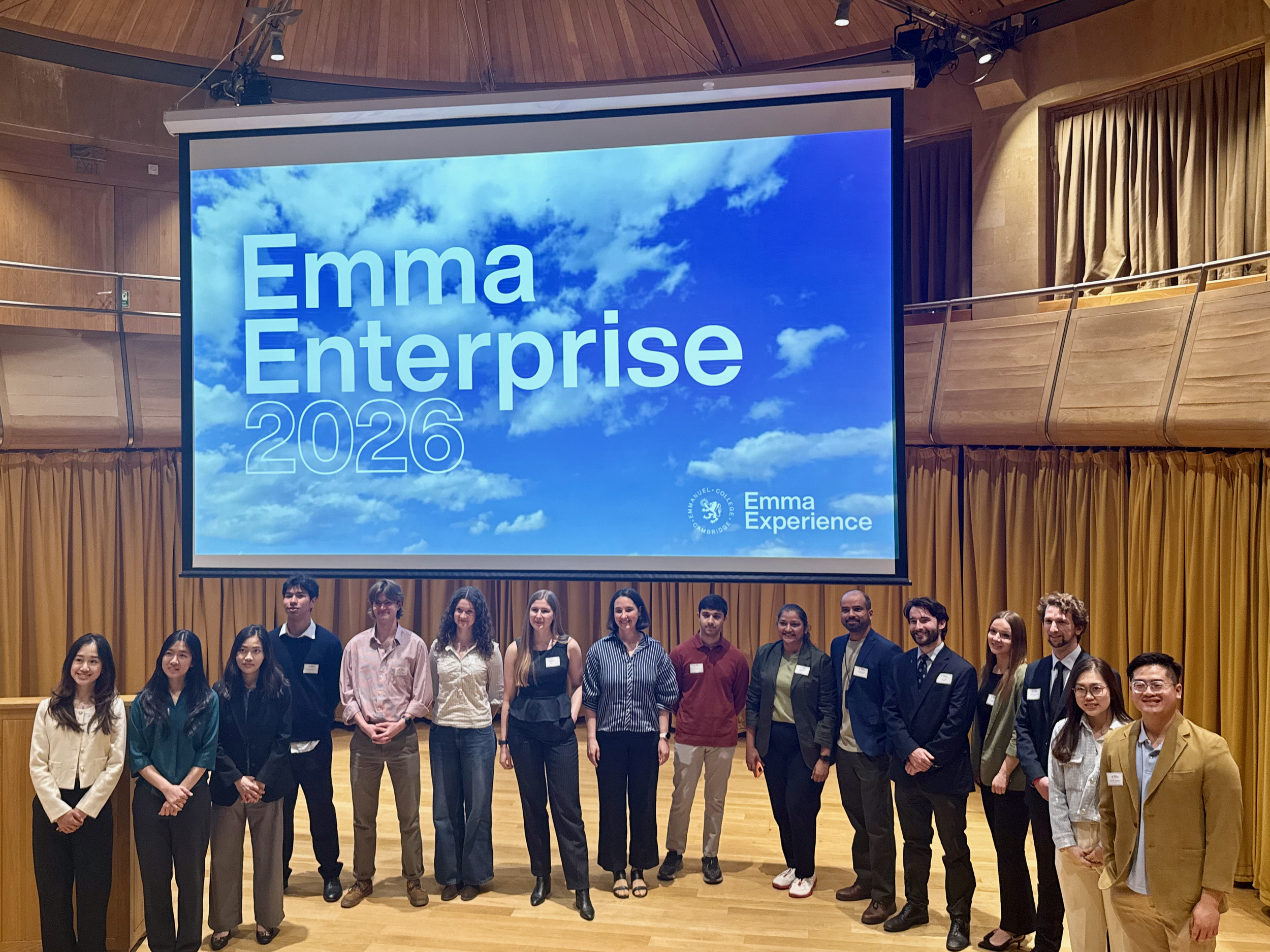
2026 Enterprise Finalists
There's something extraordinary about watching a PhD student stand up in front of a room and explain how her work in the lab could one day change the way we treat breast cancer. Ellen Schrader did exactly that in April, when she and her colleague Francesca Drummer pitched Voronai Dx, an AI-powered diagnostic tool that predicts how breast cancer patients will respond to immunotherapy, and walked away as winners of the 2026 Emma Enterprise Competition, taking home the coveted Golden Duck and a cash prize.
It was, by any measure, a remarkable moment. But it didn't come from nowhere.
Now in its third year, Emma Enterprise has become one of the College's most compelling initiatives, and part of Emma Experience, our groundbreaking co-curricular programme, which seeks to build up the skills and career readiness of our students. Emma Enterprise’s aim is straightforward: to equip students with the entrepreneurial instincts, skills, and confidence to take their ideas seriously. Not just as academic exercises, but as things that might one day exist in the world.
The 2025–26 edition drew 26 students to a two-day residential Lab in January and attracted 16 entries to its competition, with eight teams ultimately making it to the final in the Queen's Building Theatre. The ideas ranged from a new platform for managing university boat club logistics to an agritech startup that has achieved what plant scientists said was impossible: grafting across staple crops like rice and millet to breed more resilient, climate-adaptive varieties. The breadth of what interests our students, as much as the ambition, was abundantly on show.
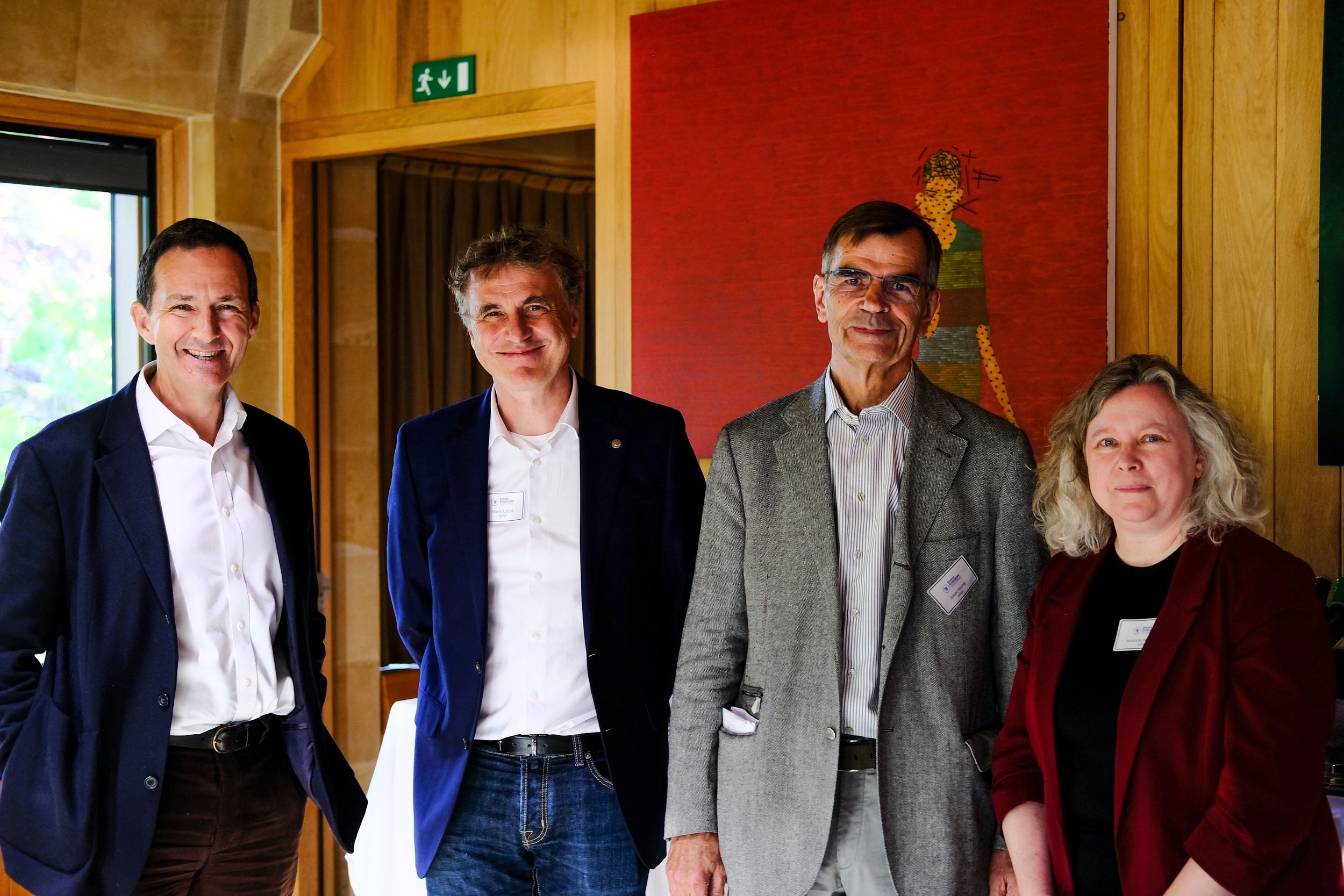
The Master, Doug Chalmers, with competition judges Florin Udrea, Steve Young and Amanda Wooding.
What distinguishes Emma Enterprise from a conventional competition is the support built around it. Fellows, staff, alumni, and a cohort of volunteer "Emma Enterprise Champions" — members who give their time as mentors and advisors, are woven through every stage of the programme.
It opened in November 2025 with a gathering of students, recent competition winners, and Enterprise Champions at the College, before moving to a residential Enterprise Lab on 16–17 January; two days of workshops and masterclasses in the Queen's Building, delivered by entrepreneurs, academics, and members who have built things themselves. Participants described it afterwards as "an excellently crafted two-day experience," praising "a great range of inspiring speakers, a nice mix of undergrads, postgrads and alumni, and a sense of entrepreneurial community at Emma."
Drop-in sessions, led by Enterprise Champion and mentor Jeremy Leong (m. 2007), offered students a lower-stakes space to think out loud. Held at Fiona's Cafe on two Monday afternoons in late January and early February, they were designed for exactly the kind of conversation that doesn't fit neatly into a formal setting, a half-formed pitch, a nagging question about a business model, a sense that an idea might be onto something but not quite knowing where to go next.
The value of those conversations, it turns out, can last well beyond the competition itself. One participant from last year's Lab and Competition got in touch recently to share what happened next: "I'm now working at a medtech startup who I found via my mentor Jeremy. The skills and network from the Lab and Competition have ended up very useful! Once we exit for billions I'd love to give back."
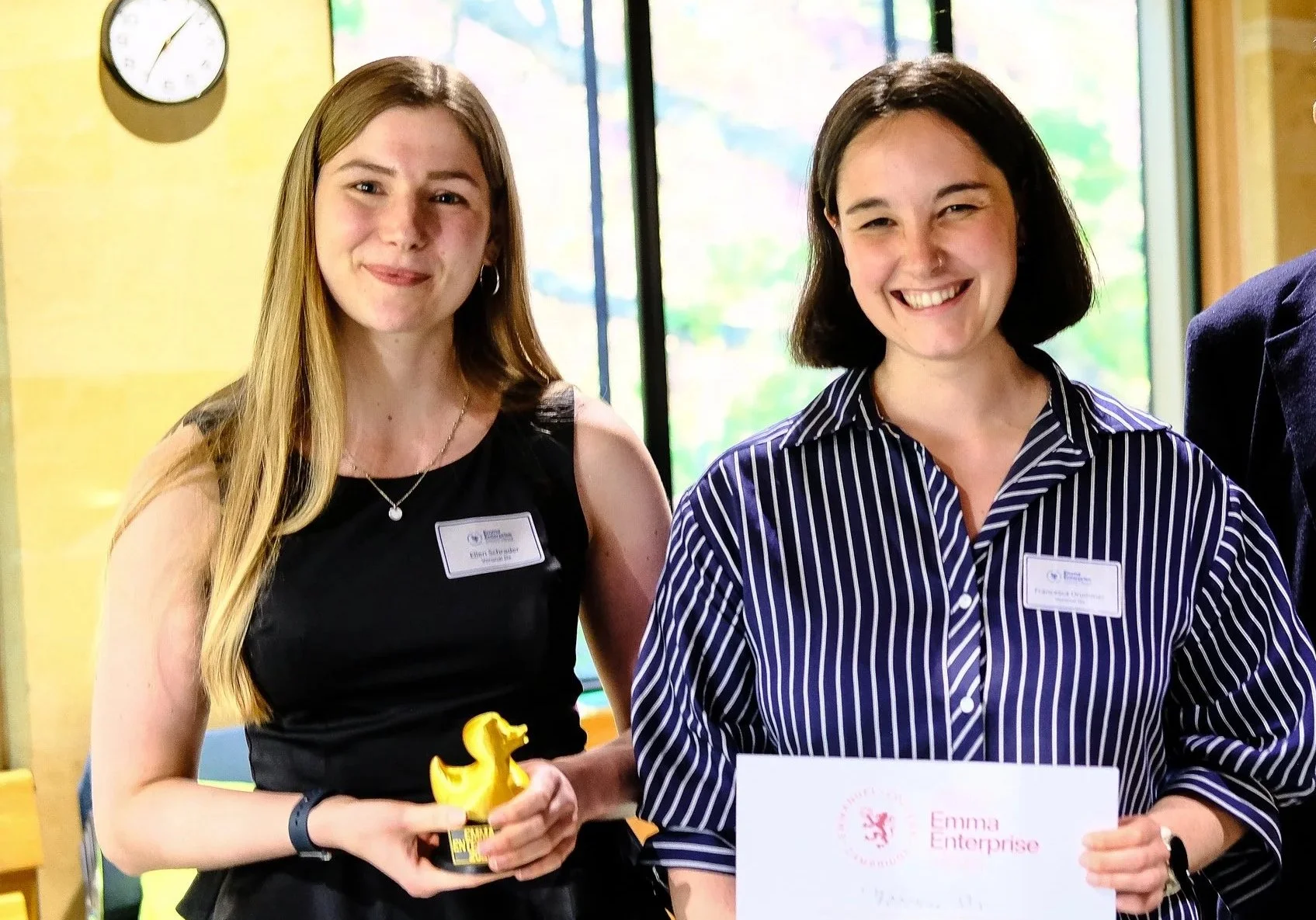
Vronai Dx
By April, eight teams had refined their ideas and were ready to pitch.
Voronai Dx, led by Ellen Schrader (PhD, Medical Sciences) and visiting PhD student Francesca Drummer, is building an AI-based diagnostic test that analyses tumour tissue images to predict whether a breast cancer patient will respond to immunotherapy, filling a gap that, as the team noted, has already proved to be worth $2.8 billion in a comparable test for chemotherapy. They were mentored by Graham Platts (1978).
The joint Runners-Up were Shed It and Blades Rowing. Shed It, was led by last year’s MCR President and PhD student Joey Toker, and mentored by Charlotte Casebourne Stock (2015) and is a regenerative medicine startup developing a drug that mobilises the body's own stem-like cells to repair damaged tissue, with a lead application in chronic kidney disease. Blades Rowing, led by keen Emma rowers Neena Kang and Tahmid Azam, and mentored by Bye-Fellow Dr Anthony Harris, is a platform already transforming how Emmanuel's own Boat Club operates, delivering its largest novice turnout, highest retention rate, and joint-best Lent Bumps entry on record.
The People's Choice Award went to PhytoMerge, the crop-grafting startup led by Anoop Tripathi (PhD, Plant Sciences), whose pitch centred on the argument, now backed by the team's own research, that conventional breeding barriers need not apply. The Encouragement Award went to Sobremesa, whose premise was perhaps the most humanly compelling in the room: an app that matches strangers for dinner, taking its name from the untranslatable and joyous Spanish word for the time spent talking around a table after a meal.
Judges Steve Young and Florin Udrea (both Emmanuel Fellows) were joined on the panel by member Amanda Wooding of Cambridge Enterprise, and scored teams equally on innovation, implementation, impact, and presentation. Tough choices on all fronts!
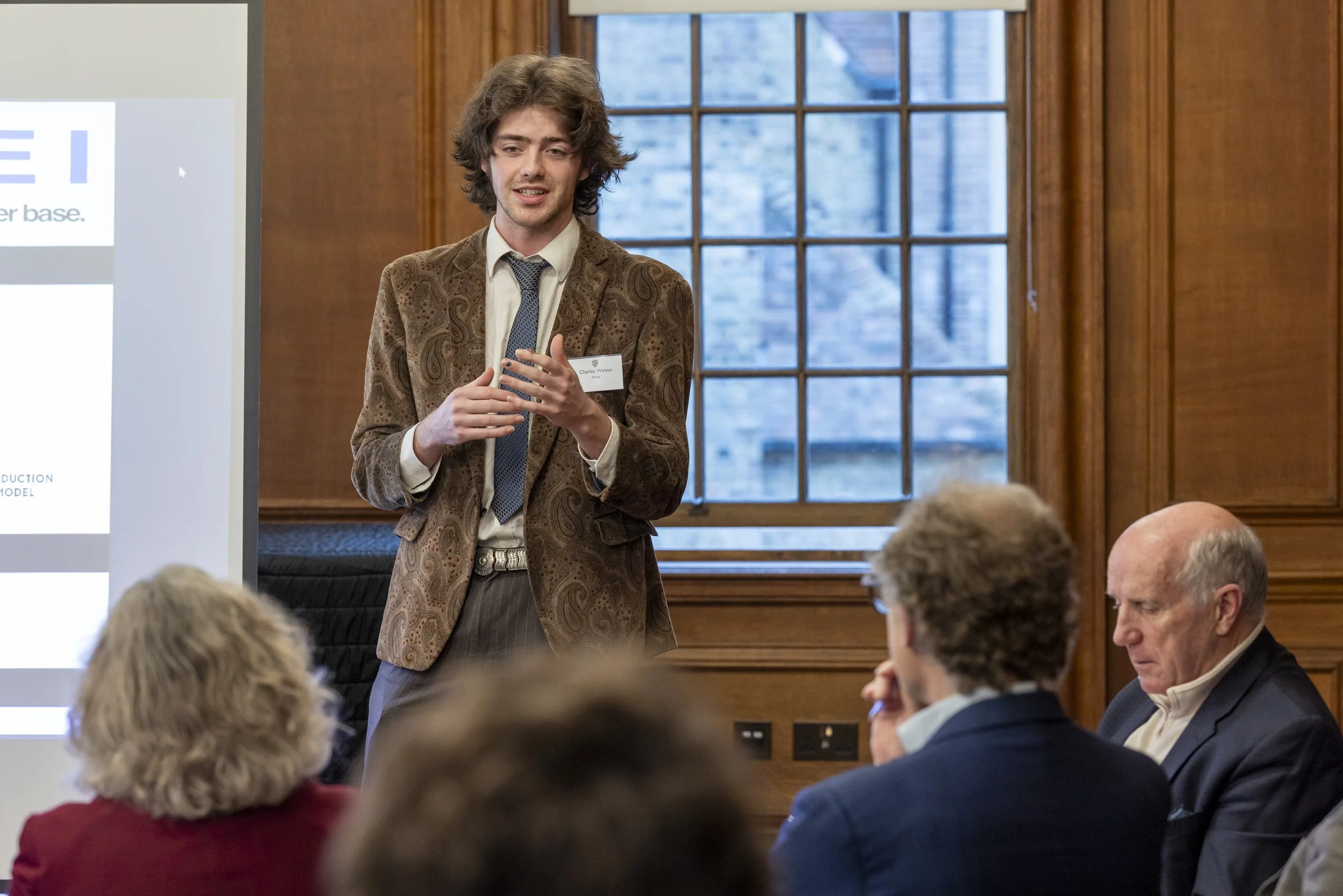
Charlie Walton at Parmee Prize
Emma Enterprise’s reach is already extending outward in ways that feel significant. Both previous winning teams, GreenHarvest (2024), which uses satellite imagery to address food security and land degradation, and IntolerSense (2025), an AI-powered healthtech startup for managing food intolerances, went on to participate in the SPARK 1.0 incubator at King's E-Lab. One of last year’s competition participants Charlie Walton has since attended both King's E-Lab Residential and the Social Enterprise Residential, and is now a finalist with his teammate in the Parmee Prize at Pembroke College.
The aim, as the programme's welcome note put it, is "blue-sky thinking: the willingness to look beyond immediate constraints and imagine what might be possible." Three years in, there's good evidence that Emma students are doing exactly that.
Emma Enterprise is part of Emma Experience, the College's co-curricular programme. It is supported by Emma Enterprise Champions - members who volunteer as mentors and advisors to student participants.
